


Rehabilitation Isn't Rest: Why Progressive Loading Matters in Equine Rehabilitation
Rest is often an important part of the early management of an equine injury. It may be required to protect damaged tissue, control pain and prevent further injury while a diagnosis is established.
However, successful rehabilitation involves much more than simply removing a horse from work and waiting for time to pass.
Muscles, tendons, ligaments, bone and joints are designed to respond to load. Once the initial stage of healing allows it, carefully controlled exercise provides the stimulus these tissues need to rebuild strength and prepare for the demands of ridden work. The challenge is applying the right type and amount of load at the right time.
Healing Is Not the Same as Being Ready to Perform
Pain and inflammation may improve before the affected tissues have recovered their strength, coordination and load-bearing capacity. A horse may appear more comfortable following a joint injection, shockwave treatment or regenerative therapy, but this does not mean the musculoskeletal system is immediately prepared to return to full work.
Time is an essential component of tissue healing. Different tissues also recover at different rates. Muscle can adapt relatively quickly, whereas tendons and ligaments have lower metabolic activity and generally require a slower, more carefully controlled progression.
A return-to-work plan must therefore consider more than whether the horse is currently comfortable. It must progressively rebuild the capacity required for the horse’s discipline, workload and previous level of performance.

Why Progressive Loading Matters
Mechanical loading is one of the signals that tells musculoskeletal tissues how to adapt. When an appropriate load is applied, muscle, tendon and bone respond by altering their structure and capacity. When loading is insufficient for too long, the horse becomes deconditioned. When loading is excessive or progresses too rapidly, healing tissue may be overloaded.
The purpose of rehabilitation is to remain between these two extremes.
Progressive loading means beginning with a level of exercise the horse can tolerate, monitoring the response, and gradually increasing one variable at a time. This may include duration, speed, gradient, surface, complexity or the amount of weight carried.
This process requires time and attention. Rehabilitation should not be progressed simply because a set number of weeks has passed. The horse’s clinical response, movement quality and ability to complete the prescribed work should guide each change.
Isometric and Eccentric Loading
Human physiotherapy commonly describes muscle and tendon loading according to the type of contraction involved.

An isometric contraction occurs when a muscle produces force without a substantial change in length. In equine rehabilitation, this principle is relevant to controlled postural and stabilisation exercises in which the horse maintains its position against a small challenge.
An eccentric contraction occurs when a muscle produces force while lengthening. This type of loading is important during deceleration, controlled lowering and movement over gradients or changes in terrain.
Research in human tendinopathy supports progressive resistance exercise as a central part of rehabilitation. Isometric loading can be useful during early rehabilitation and may reduce pain in some patients, while eccentric and heavy slow resistance exercises are used to progressively rebuild tendon and muscle capacity. Current evidence supports combining appropriate forms of loading rather than relying on eccentric exercise alone.
Direct equine research in this area is more limited. We should therefore be cautious about transferring a specific human protocol directly to a horse. The broader principle is still highly relevant: healing tissues require carefully graded mechanical stimulus, introduced according to the diagnosis and stage of recovery.
The Effect of Excessive Rest
Periods of strict rest may be necessary for some injuries, particularly during the acute phase. Problems arise when inactivity continues beyond the period for which it is clinically required.
Prolonged reduction in exercise contributes to:
loss of muscle mass and strength
reduced cardiovascular fitness
reduced postural endurance
impaired coordination
decreased tissue capacity
a greater gap between the horse’s current condition and the demands of ridden work
This means that a horse may no longer be painful but may still lack the physical capacity required to stabilise its body during locomotion. Simply returning that horse to its previous workload can expose joints and healing tissues to forces that the surrounding muscles are not yet able to control effectively.
Why Core and Deep Stabilising Muscles Matter
The equine trunk is not a rigid structure. It must remain stable enough to transfer forces between the limbs and spine, while still allowing the movement required for efficient locomotion.
Deep stabilising muscles, including the multifidus, contribute to local control of the vertebral column. The abdominal musculature, epaxial muscles and muscles associated with the thoracic and pelvic girdles also contribute to postural control and force transmission.
Adequate trunk control helps the horse:
stabilise the spine during movement
transfer forces between the forelimbs and hindlimbs
maintain posture as speed and direction change
control limb placement
respond to variations in surface and terrain
support coordinated loading through the joints
Equine research has shown that dynamic mobilisation exercises can increase the cross-sectional area and improve the symmetry of the multifidus muscle. Other studies have demonstrated activation of the multifidus during exercises involving poles and resistance-based training systems.
This does not mean every horse should receive the same collection of “core exercises.” The exercise must be selected according to the horse’s diagnosis, current strength, balance and stage of rehabilitation. That being said there are many stall type exercises we can do to help maintain some generalised stability. These may include rocking the withers or pelvis or small range baited stretches. Any of these exercises should be cleared
Rehabilitation Is More Than Walking in Straight Lines
Controlled walking is often an appropriate starting point, but it is not a complete rehabilitation programme.
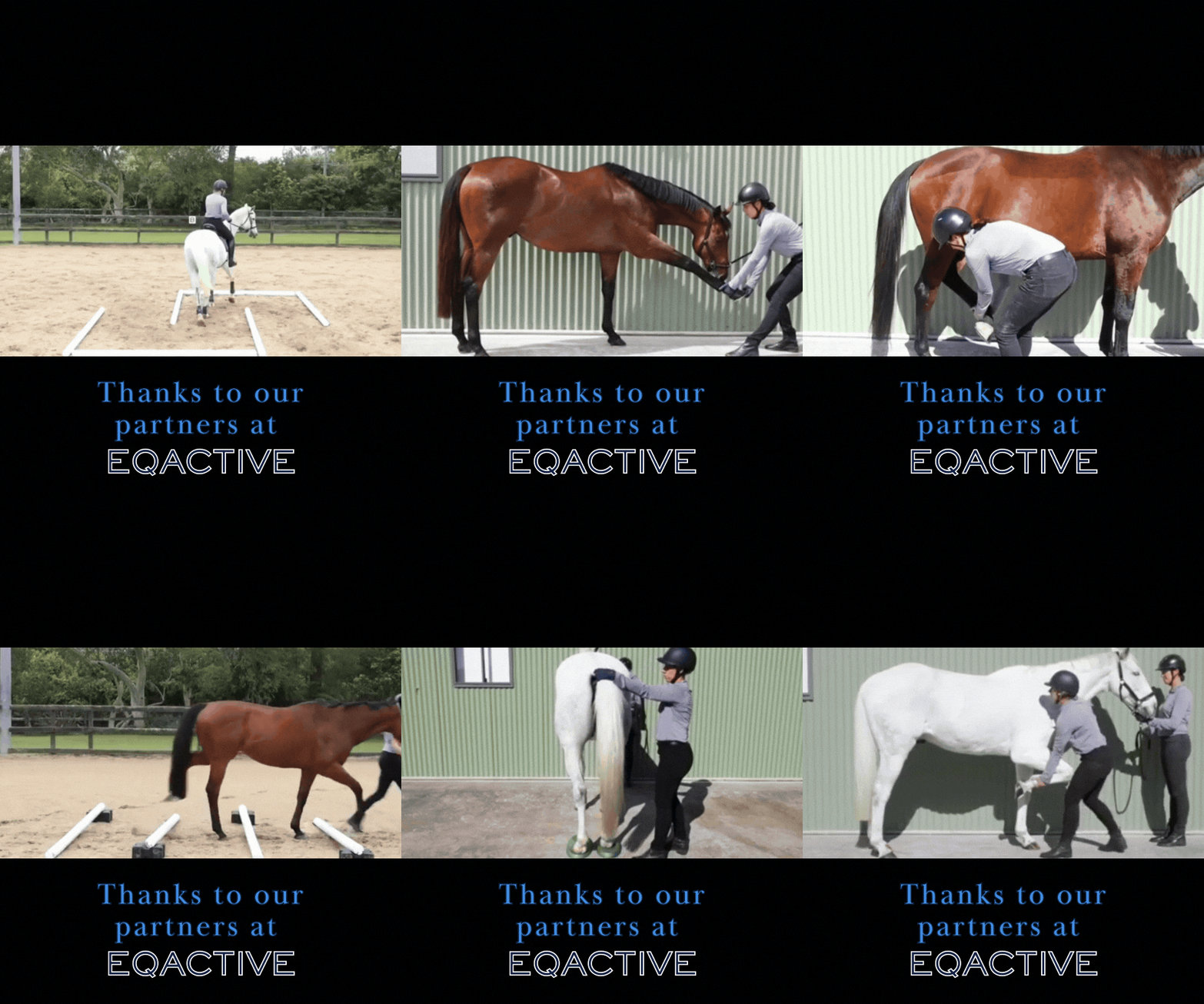
Depending on the diagnosis, rehabilitation may later include:
controlled in-hand walking
dynamic mobilisation exercises
postural and balance exercises
pole work
carefully introduced gradients
changes in surface
progressive ridden exercise
proprioceptive exercises
discipline-specific conditioning
Each exercise should have a defined purpose. Pole work may be used to alter limb placement and increase joint excursion. Gradients may increase muscular demand, but can also substantially alter tendon and joint loading. Circles introduce asymmetrical forces and may not be appropriate during the early stages of some rehabilitation programmes.
The exercise choice, dosage and timing all matter.
Monitoring the Response
A rehabilitation programme should evolve as the horse progresses. Clinical reassessment allows us to evaluate:
pain and tissue sensitivity
joint range of motion
swelling or heat
muscle development
posture and spinal mobility
gait quality
tolerance of the current workload
Objective gait analysis can also help monitor movement symmetry over time. This is particularly useful when changes are subtle or when the horse appears comfortable but has not yet returned to its previous movement pattern.
Progression may be appropriate when the horse is completing the prescribed exercise comfortably, maintaining movement quality and showing no adverse response afterwards. Conversely, increasing stiffness, swelling, heat, pain or gait asymmetry may indicate that the workload needs to be modified.
Every Programme Must Be Individual
There is no standard rehabilitation timetable that is appropriate for every horse.
The programme should account for:
the diagnosis and tissue involved
the severity and duration of the condition
treatments performed
the horse’s age and previous fitness
discipline and performance goals
temperament and handling safety
available facilities and surfaces
the owner’s capacity to complete the programme consistently
The aim is not simply to return the horse to work. It is to prepare the horse to tolerate that work safely and sustainably.
FAQ's
Why is rest alone not enough?
Rest may protect an injury during the early stages, but prolonged inactivity leads to deconditioning. Progressive exercise is required to rebuild strength, coordination and tissue capacity before the horse returns to full work.
What is progressive loading?
Progressive loading is the gradual increase of controlled physical demand placed on healing tissues. Exercise is advanced according to the diagnosis and the horse’s response, rather than according to time alone.
Are eccentric exercises essential for tendon rehabilitation?
Eccentric loading can be useful, particularly within human tendon rehabilitation, but it is not the only effective approach. Current research supports progressive loading programmes that may combine isometric, isotonic, eccentric and resistance exercise. Equine programmes must be adapted to the horse and the specific injury.
Why are core exercises important?
Trunk and deep spinal stabilising muscles contribute to posture, spinal control and the transfer of forces during locomotion. Targeted exercises can help rebuild these functions following periods of pain, injury or reduced work.
How do I know when my horse is ready to progress?
Progression should be based on clinical reassessment, movement quality and the horse’s response to the current workload. A fixed timetable cannot account for every horse’s diagnosis and rate of recovery.
Key Take-Home Points
Rest may be necessary, but it is only one stage of rehabilitation.
Healing tissue requires carefully graded loading to rebuild capacity.
Isometric, eccentric and other resistance-based exercises have different roles within progressive rehabilitation.
Excessive inactivity contributes to deconditioning and reduced postural capacity.
Core and deep stabilising muscles are important for spinal control and force transfer during locomotion.
Rehabilitation should progress according to the horse’s response, not time alone.
Treatment, progressive exercise and regular reassessment must work together.
Supporting Rehabilitation Beyond the Initial Treatment
Every rehabilitation plan should be based on the diagnosis and tailored to the individual horse. Where appropriate, Core Equine rehabilitation programmes are supported through EqActive, providing owners with clear exercise instructions, videos and planned progressions.
Learn More About Equine Rehabilitation
Is Pro-Stride the Right Treatment for Your Horse? Learn how Pro-Stride works, how it compares with corticosteroids and where regenerative joint therapy may fit within a broader treatment plan.
Beyond the Eye: Understanding Objective Gait Analysis Learn how objective gait analysis supports the detection and monitoring of subtle movement asymmetry.


Comments